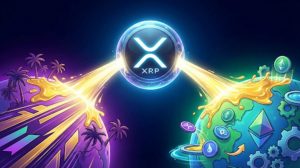
It is the “Cold War” of the cryptocurrency world. On one side stands Ethereum (ETH), the established decentralized supercomputer, the home of DeFi, and the darling of Wall Street giants like BlackRock. On the other stands Solana (SOL), the high-speed challenger, the retail casino, and the engine of the DePIN revolution.
As we close out 2025, the market prices tell a story of fear and consolidation. Ethereum is trading at $2,927, struggling to maintain the $3k psychological support. Solana has retraced to $125, cooling off after a blistering run. For the investor building a 2026 Portfolio, this moment represents a fork in the road.
Should you bet on the Modular safety of Ethereum? Or the Monolithic speed of Solana? Or is the dreaded “Flippening”—where Solana surpasses Ethereum in market cap—actually possible? This exhaustive 2,500-word guide breaks down the technology, the economics, and the investment thesis for the two giants of 2026.
Chapter 1: The Philosophical Divide (Modular vs. Monolithic)
To understand the investment case, you must first understand the architecture. They are not trying to solve the problem in the same way.
Ethereum: The Modular City
Ethereum has accepted that it cannot be fast on its own. Instead, it has chosen to be a “Settlement Layer.” Think of Ethereum as Manhattan—secure, expensive, and crowded. To solve this, it builds skyscrapers (Layer-2s) like Base, Arbitrum, and Optimism on top of it.
- Pros: Maximum security and decentralization. If a Layer-2 fails, the main Ethereum chain is safe.
- Cons: Fragmentation. Moving money from Base to Arbitrum is a headache (Bridging) and fragments liquidity.
Solana: The Monolithic Factory
Solana rejects layers. It wants to be a single, massive global state machine. Think of Solana as a giant factory floor where everyone works in the same room.
- Pros: Speed and Composability. An application can talk to another application instantly without bridges. This is why AI Agents prefer Solana.
- Cons: Hardware requirements. Running a Solana node is expensive, leading to concerns about centralization.
Chapter 2: Ethereum in 2026 – The “Institutional Bond”
Critics say “Ethereum is dead” because the price is boring. They are missing the point. Ethereum has morphed from a tech stock into a digital bond.
The Yield Economy
With staking yields around 3-4%, Ethereum has become the risk-free rate of the internet. Institutional investors love this.
The BlackRock Factor: The launch of the BUIDL fund on Ethereum signals that when Wall Street tokenizes Real World Assets (RWA), they choose Ethereum for its safety record.
The Layer-2 Empire
Ethereum’s growth is now hidden in its Layer-2s. As we analyzed in our Aerodrome Analysis, the Base network (Coinbase) is processing more transactions than the mainnet. Ethereum is taxing all these L2s, burning ETH with every block. It is a deflationary supply engine.
Chapter 3: Solana in 2026 – The “Consumer App Store”
If Ethereum is B2B (Business to Business), Solana is B2C (Business to Consumer). It is the chain where things actually happen.
The “Firedancer” Upgrade
The biggest catalyst for 2026 is Firedancer. This is a new validator client built by Jump Crypto that aims to boost Solana’s throughput to over 1 million TPS (Transactions Per Second). If successful, Solana will be faster than the Nasdaq.
The DePIN & AI Hub
Solana has cornered the market on new tech trends.
1. DePIN: Projects like Helium and Render chose Solana for its speed. (See: DePIN Guide).
2. Payments: With PayPal launching PYUSD on Solana and Shopify integrations, it is becoming a real payment rail.
Chapter 4: The “Flippening” Analysis – Is It Math or Dream?
The “Flippening” refers to the hypothetical moment Solana’s Market Cap exceeds Ethereum’s. Let’s look at the numbers based on December 2025 data.
- Ethereum Market Cap: ~$350 Billion (at $2,927 price)
- Solana Market Cap: ~$60 Billion (at $125 price)
The Gap: Solana needs to do a 6x while Ethereum stays flat to flip it.
Verdict: Extremely unlikely in 2026. Ethereum has too much institutional sticky capital. However, Solana outperforming Ethereum in percentage gains (ROI) is highly probable.
Chapter 5: User Experience and Ecosystem
Investment flows where users go.
Wallets
- Ethereum: Relying on MetaMask and Rabby. The UX is improving with Account Abstraction, but gas fees on mainnet ($2-$50) still shock new users.
- Solana: Relying on Phantom Wallet. The UX is buttery smooth. Transactions cost $0.0001 and confirm in 400 milliseconds. For retail onboarding, Solana wins hands down.
Meme Coin Culture
While Ethereum has PEPE, the gas fees make it a “Rich Man’s Game.” Solana is the home of the “Degen.” The volume of meme coin trading on Solana often surpasses Ethereum, driving massive demand for SOL (which is needed to buy the coins).
Chapter 6: Risks – What Could Go Wrong?
Every investment has a kill switch.
Ethereum Risks
L2 Fragmentation: If liquidity gets trapped in hundreds of different Layer-2s (Base, Optimism, Blast, Mantle), the user experience becomes a nightmare of bridges. Ethereum risks becoming a “Ghost Chain” used only for settlement, while L2 tokens capture the value.
Solana Risks
Network Outages: Solana has a history of going offline. In a financial system, 99% uptime is not enough; you need 100%.
FTX Shadow: Although it has recovered, a significant portion of SOL supply is still locked in the FTX bankruptcy estate, creating periodic sell pressure.
Chapter 7: Price Predictions for 2026
Based on our models, here is where we see the prices heading in the next 12-18 months.
Ethereum (ETH) Prediction
- Bear Case: $2,200 (Loss of L1 dominance)
- Base Case: $4,500 – $5,500 (Steady ETF inflows + Deflation)
- Bull Case: $8,000 – $10,000 (If Wall Street tokenizes bonds en masse)
Solana (SOL) Prediction
- Bear Case: $80 (Network failure or competition from Sui)
- Base Case: $300 – $450 (Reclaiming ATH + Growth)
- Bull Case: $750 – $1,000 (The “Super App” thesis plays out)
Chapter 8: The Verdict – How to Allocate?
So, who wins? The answer is Both, but for different roles in your portfolio.
The “Safe Growth” Allocation (Ethereum)
Treat Ethereum like Microsoft. It is not going anywhere. It pays a dividend (Staking). It is the safe foundation. If you are protecting wealth, 50% of your portfolio belongs here.
The “Venture Capital” Allocation (Solana)
Treat Solana like Nvidia. It is high growth, high volatility, and powers the new tech (AI/DePIN). If you are building wealth, you need significant exposure here.
The Hedge (The Third Player)
Do not ignore the newcomers. As we discussed, Sui is technically superior to Solana in some aspects, and Base (Coinbase) is capturing the Ethereum retail market. A smart 2026 portfolio is not 50/50; it is diversified.
Conclusion: The Multi-Chain Future
The “Ethereum Killer” narrative is dead. Solana didn’t kill Ethereum; it created a new market. Ethereum is securing the world’s value, while Solana is executing the world’s transactions.
At current prices ($2,927 and $125), both assets offer compelling entry points relative to their 2026 potential. The biggest risk is not owning either. Choose your warrior, or better yet, bet on the entire arena.
To learn how to store both assets safely in one device, check our Best Cold Wallets Guide.