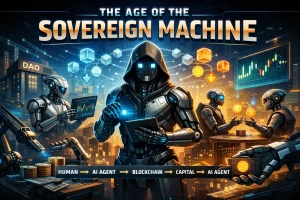
Multi-Agent Systems (MAS) are exactly what they sound like: multiple AI agents that collaborate to complete a larger job. Instead of one “do everything” bot, you get a team—one agent plans, another gathers data, a third checks constraints, and a fourth executes actions.
In crypto, that matters because the ecosystem is naturally modular: wallets, on-chain transactions, decentralized exchanges, stablecoin rails, and smart contracts all behave like separate systems. MAS is becoming a major 2026 trend because it mirrors how real users operate—research, compare, verify, then execute—only faster and (sometimes) with fewer mistakes. The keyword is sometimes, which is why safety and verification matter more than hype.
Key takeaways
- MAS is coordination, not magic. Multiple agents split roles: research, risk checks, execution, and monitoring.
- The real risk is permissions. The moment an agent can sign transactions, your threat model changes.
- “Autonomous” is a spectrum. The safest setups keep humans in the final approval loop for on-chain actions.
- Verification beats vibes. If results can’t be audited (inputs, outputs, and execution), treat claims as marketing.
- Crypto adds unique failure modes. MEV, spoofed tokens, malicious approvals, and social engineering scale fast with agents.
What Multi-Agent Systems are (in plain English)
A Multi-Agent System is a group of specialized software agents that communicate and collaborate. Each agent has a narrow responsibility, and together they achieve a goal that would be slow, fragile, or expensive for a single agent.
The simplest MAS mental model
- Coordinator (Manager): Breaks a big goal into tasks, assigns roles, and resolves conflicts.
- Researcher: Collects information (market data, contract details, social signals) and summarizes evidence.
- Risk Controller: Applies rules: permission limits, slippage caps, blacklists, and “stop if uncertain.”
- Executor: Performs actions: prepares transactions, signs (if allowed), submits, and confirms outcomes.
- Monitor: Watches for changes (price moves, approvals, contract updates) and triggers alerts.
What makes MAS different from “a chatbot”
A chatbot mostly talks. MAS is built to act—to run a workflow end-to-end. In crypto, “acting” often means interacting with wallets, contracts, and DEXs. That’s powerful, but it’s also why MAS can become dangerous when the system isn’t designed with strict guardrails.
Why MAS fits crypto so well in 2026
Crypto workflows are already multi-step and multi-tool. Even simple actions—bridging, swapping, staking, or moving stablecoins—require context, verification, and execution. MAS is basically an automation layer that tries to do those steps consistently.
Where MAS shows up in crypto products
- Portfolio operations: Rebalancing rules, tax lots, alerts, and monitoring across chains.
- DEX execution helpers: Route selection, slippage constraints, and partial-fill logic.
- Security tooling: Contract checks, approval audits, phishing detection, and “safe mode” transaction templates.
- Payments and stablecoin flows: Converting, batching, and reconciling transfers for invoices or remittances.
- Governance and research: Reading proposals, summarizing changes, simulating outcomes, and tracking votes.
If you’re new to the bigger picture, start with a clear foundation on how crypto systems fit together. It will make MAS concepts click faster.
Mechanics of MAS: the three layers that matter
Most MAS in crypto can be understood as three layers. If you evaluate projects using these layers, you’ll spot both value and risk quickly.
Layer 1: Reasoning and planning
This is where agents decide what to do. The danger is “confident wrongness”: agents may produce plausible plans based on incomplete or manipulated inputs. Good systems log assumptions, ask for confirmation on ambiguous steps, and refuse to proceed when they cannot verify key facts.
Layer 2: Coordination and communication
Agents share information and negotiate decisions. This layer needs rules: who can overrule whom, how conflicts resolve, what happens when two data sources disagree, and what “stop conditions” trigger a halt.
Layer 3: Execution on-chain (the sharp edge)
This is the wallet and transaction layer. It includes preparing calldata, approvals, signing, broadcasting, and confirming. If a MAS touches execution, you should treat it like a financial product with strict operational risk.
Before letting any tool near execution, refresh your basics on self-custody and security controls, and keep a clean separation between test wallets and real funds using a dedicated wallet setup.
Practical checklist #1: A quick “MAS reality check”
- Role clarity: Can the project explain each agent’s role in one sentence?
- Human approval: Are you required to approve transactions, or can it sign automatically?
- Auditability: Can you see what inputs were used and why a decision was made?
- Boundaries: Are there hard limits (max spend, max slippage, token allowlist)?
- Failure handling: Does it stop safely when uncertain, or “push through” to complete?
- Security posture: Does it encourage test wallets, least-privilege permissions, and revocable access?
Practical checklist #2: On-chain verification steps (no trust required)
MAS hype collapses the moment you verify execution details. These steps are simple, and they work whether you’re evaluating an “agent token” or an “agent app.”
- Confirm the contract address from a reliable source, then verify it on-chain.
- Check token authenticity using the methods in this fake-token detection walkthrough.
- Inspect transactions with a block explorer workflow: approvals, transfers, and any strange internal calls.
- Review permissions before interacting: token approvals and contract allowances are where most wallet drains begin.
- Test with small amounts from a clean wallet. Never “test” with your main wallet.
If you want to experiment without gambling with your wallet security, treat MAS tools like you’d treat a new device on your home network: isolate it.
- Use a test wallet: Create a separate wallet and fund it minimally.
- Prefer manual execution: Let the agent propose steps; you approve the final transaction.
- Limit approvals: Avoid unlimited approvals unless you understand the risk and can revoke later.
- Use a stablecoin-first approach: Stablecoin rails reduce “price shock” risk while you learn. See how stablecoins function in real-world payments and settlement.
- DEX caution: If the workflow touches swaps, revisit DEX mechanics, slippage, and MEV risks.
MAS in crypto vs “AI agents” in crypto
Many people use “AI agents” as a broad label. MAS is more specific: it’s the architecture for getting multiple agents to cooperate. If you want the clean bridge from single agents to multi-agent workflows, read what AI agents are in the crypto context, then come back here.
Also note: “autonomous trading agents” are a common entry point for MAS. They can be educational, but they are also where risk escalates quickly. If you explore that area, keep strict guardrails and start with a comparison of autonomous agent approaches and their safety tradeoffs.
Common mistakes people make with MAS
- Confusing automation with accuracy: Faster decisions are not better decisions if the inputs are wrong.
- Granting broad permissions: Unlimited approvals and persistent wallet connections are the #1 avoidable risk.
- Trusting opaque “agent scores”: If you can’t inspect how a score is computed, it’s marketing.
- Ignoring execution costs: Gas, slippage, failed transactions, and MEV can quietly erase outcomes.
- Skipping small-scale tests: People jump from zero to full size, then learn the hard way.
- Assuming one good week proves reliability: Most failures show up under stress—volatility, congestion, or edge cases.
Risks and red flags
MAS can be valuable. It can also be a new wrapper for old problems. Here are the risks that matter most in crypto.
Security risks
- Wallet-drain patterns: Malicious approvals, spoofed tokens, and transaction simulation tricks.
- Prompt injection and data poisoning: Agents can be manipulated by inputs crafted to change their behavior.
- Key handling mistakes: Any system that stores keys, exports seeds, or requests “backup phrases” is an immediate stop.
Economic and execution risks
- MEV exposure: Automated execution can be predictable, making it easier to exploit.
- Liquidity illusions: Agents can route into thin pools, causing extreme slippage.
- Incentive misalignment: If an agent is rewarded for “activity” rather than outcomes, it may overtrade.
Governance and accountability risks
- No clear responsibility: If losses happen, who is accountable—team, protocol, user?
- Hidden dependencies: If the system relies on centralized services, outages can break “autonomy.”
- Unverifiable claims: “Backtested,” “battle-tested,” or “institutional-grade” without specifics is a red flag.
FAQ
Is MAS the same as “agentic AI”?
Not exactly. “Agentic AI” is a broad idea: AI systems that can take actions. MAS is a specific structure: multiple specialized agents coordinating to complete tasks.
No. The safest designs let agents suggest actions while you approve transactions manually. If a tool insists on signing automatically, treat it as high risk.
Can MAS reduce mistakes for beginners?
It can reduce certain mistakes (like missing steps), but it can also introduce bigger ones (like unsafe permissions). Beginners should prioritize verification and use small test amounts.
What’s the safest way to experiment with MAS?
Use a separate test wallet, limit approvals, keep human confirmation for transactions, and verify everything with a block explorer before repeating actions at larger size.
Are “MAS tokens” always scams?
No. Some tokens may represent real network utility. However, the label is often used loosely. Evaluate the product, the execution model, and on-chain behavior rather than narratives.
How do I know if an agent is “really on-chain”?
Look for verifiable transaction history, clear contracts, and transparent execution. If the project can’t show what actions happen on-chain and what happens off-chain, assume the marketing is ahead of reality.
What’s the biggest technical risk unique to crypto MAS?
Permissions and execution. A smart agent that can sign transactions is a powerful tool—but also a powerful attack surface if compromised or misconfigured.
Will MAS replace traders and analysts?
It’s more likely to augment workflows than replace them. The best outcomes come from MAS that speeds up research and checks, while humans still set strategy and approve high-risk actions.
Closing thoughts
Multi-Agent Systems are becoming a defining AI-crypto theme because they map onto how crypto actually works: multiple moving parts, multiple sources of truth, and multiple steps before execution. The opportunity is real—better coordination, better monitoring, fewer missed checks. The danger is also real: once “autonomy” reaches your wallet, mistakes scale fast.
Informational only, not financial advice.