The Solana landscape of 2026 bears little resemblance to the experimental “beta” years of the early 2020s. As of late January 2026, the network has achieved what many skeptics once deemed impossible: a harmonious marriage of retail agility and institutional-grade stability. The staking rate has recently hit a staggering historical high of 68.8%. This is not merely a statistic; it is a declaration of confidence. While the price of SOL has faced a drawdown from its early 2025 peaks near $293, currently consolidating between $126 and $145, the underlying network activity tells a story of aggressive accumulation by long-term holders.This “Great Maturation” is underpinned by two pillars of technical innovation: the full production launch of the Firedancer validator client and the impending Alpenglow consensus upgrade. For the beginner staker, this means the days of worrying about frequent network outages are largely behind us. However, a more robust network brings a more complex set of responsibilities. In 2026, safe staking is no longer just about “earning yield”; it is about navigating the new programmatic slashing era of SIMD-0212 and shielding assets from the rise of AI-generated phishing scams.Solana Network Market Metrics: Q1 2026 Overview| Metric | 2024 (Q4) | 2026 (Q1) | Growth / Change |
|---|
| Staking Ratio | 64% | 68.8% | +4.8% |
| Active Validators | ~1,900 | ~789 (Core) | Consolidation |
| TPS (Real-world) | ~3,000 | ~65,000+ | ~20x Increase |
| Finality Time | ~12.8s | ~400ms (150ms Goal) | Radical Speed Improvement |
The Firedancer Revolution: A New Security Benchmark
Perhaps the most significant event in Solana’s history, the Firedancer validator client, developed by Jump Crypto, has officially crossed the 20% stake threshold on the mainnet. For the uninitiated, this is a revolutionary milestone for decentralization and safety. Previously, Solana relied almost exclusively on a single codebase (Agave). Today, with Firedancer running in production, a bug in the Agave client can no longer halt the entire network, as Firedancer provides an independent execution path.
This technical diversity is what has finally opened the floodgates for institutional capital. In early January 2026, Morgan Stanley filed for a spot Solana ETF, following the lead of early 2025 successes where net assets in Solana ETFs exceeded $1 billion. For the beginner staker, this means you are no longer participating in a fringe asset; you are staking in a network that major global banks now consider the “institutional L1 leader”.
The Alpenglow Upgrade: Sub-Second Finality
Following closely on the heels of Firedancer is the Alpenglow consensus upgrade. Scheduled for mainnet rollout in Q2 2026, Alpenglow aims to reduce finality times from the current 400ms to a blistering 150ms. This upgrade replaces the legacy Proof of History and Tower BFT mechanisms with a more resilient Votor/Rotor consensus. While this increases the network’s efficiency, it also tightens the requirements for validator performance. If you choose a validator that cannot keep up with these sub-second demands, your staking rewards will suffer a noticeable decline.
Understanding the “New” Risks: Slashing and SIMD-0212
In 2026, the concept of “risk-free” yield is a myth. The Solana community recently moved toward the implementation of programmatic slashing via SIMD-0212. For years, Solana operated under “social slashing,” where malicious actors were manually deterred by the community. Now, the protocol itself is gaining the ability to burn a portion of a validator’s stake if they commit double-signing or other high-severity infractions.
The proposed slashing function is quadratic, meaning small mistakes (likely operator error) are penalized lightly, while large-scale coordinated attacks are hit with catastrophic losses. For example, a minor violation might result in a 1.2% stake loss, while a major infraction could see over 7.3% of the principal destroyed. This makes your choice of validator more than just a matter of maximizing APY; it is now a matter of principal protection.
2026 Staking Yield vs. Risk Profile| Staking Method | Typical APY | Principal Risk | Liquidity Status |
|---|
| Native Staking | 6–8% | Slashing (Moderate) | 2-3 Day Unbonding |
| Liquid Staking (Jito/INF) | 7–8.5% | Smart Contract (Low-Mid) | Instant (via LST) |
| Restaking (Solayer) | 8–12%+ | Tiered Slashing (High) | LRT (Tradable) |
Step 1: Establishing Your 2026 Security Perimeter
Before you ever touch a “Stake” button, your custody strategy must be airtight. The year 2025 saw an estimated $17 billion lost to crypto scams, and 2026 has introduced the threat of AI deepfakes. Scammers now use AI to clone the voices and videos of project founders to lure users into “staking” on fraudulent platforms.
Hardware Isolation: The Non-Negotiable Step
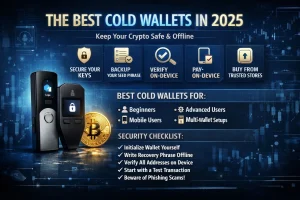
In 2026, a hardware wallet is not optional. Devices like the Ledger Nano Gen5 or Ledger Flex utilize bank-grade Secure Element chips that are immune to digital hacks. These devices now feature “Secure Touchscreens” that operate independently of your computer’s OS, preventing malware from spoofing transaction details. When you sign a staking transaction, the Ledger device itself displays the exact contract address and token amount, ensuring you are not accidentally “blind signing” a drainer contract.
Software Interface Selection
While the hardware stores your keys, the software wallet acts as your command center. In 2026, Phantom remains the most popular for its clean, multi-chain interface. However, Solflare has become the preferred choice for serious stakers due to its advanced validator selection interface and deep integration with “Wiz Score” decentralization metrics. For those looking for a one-stop-shop, Gate Wallet has emerged as a powerhouse, supporting over 100 chains including Solana, within a single decentralized interface.
Step 2: Funding Your Wallet Safely
Once your hardware wallet is set up, you need to acquire SOL. In 2026, retail users have more regulated options than ever. WisdomTree has brought its full suite of regulated tokenized funds to Solana, allowing users to move from traditional finance into SOL with high levels of transparency. If you are using a centralized exchange like OKX or Binance, ensure you take advantage of their new institutional-grade security controls and insurance funds before withdrawing your SOL to your hardware-secured address.
Step 3: Navigating the Validator Minefield
This is where most beginners make their first mistake. Do not simply choose the validator with the highest APY. In the era of SIMD-0212 slashing, you must look for “quality of infrastructure” over “cheap commissions.” Use tools like Stakewiz or Solana Compass to vet your options.
Critical Metrics for 2026:
- Uptime and Performance: Look for 99.9%+ uptime. With the Alpenglow upgrade, missed blocks translate directly into missed rewards.
- Commission Rates: 0% commission validators are often “marketing” accounts. High-quality operators running Firedancer-compatible hardware often charge 3-5% to sustain their operations.
- Client Diversity: If a validator is running Firedancer, they are contributing to the network’s resilience. This is a massive “trust” signal in 2026.
- MEV Sharing: Validators running Jito-Solana can offer an extra 1-2% yield by sharing Maximum Extractable Value (MEV) rewards with their stakers.
Comparative Analysis: Top Staking Aggregators in 2026| Platform | Asset Support | Unstaking Fee | Primary Benefit |
|---|
| Sanctum | 1,400+ LSTs | 0.1–0.3% | Universal liquidity; No protocol lock-in |
| Jito | jitoSOL only | Variable | Deepest single-token liquidity; MEV focus |
| OKX Staking | Curated List | None | Insured/vetted validators for beginners |
Step 4: Executing the Stake
Once you’ve selected a validator, the process in Phantom or Solflare is simple: navigate to the “Earn” tab, select “Stake SOL,” and enter the amount. Pro Tip: Never stake 100% of your SOL. Always keep at least 0.05 SOL in your wallet to cover the transaction fees for future rewards claiming or unstaking.
In 2026, you must choose between Native Staking and Liquid Staking. Native staking locks your SOL for 2-3 days (one epoch) when you want to withdraw it. Liquid staking, via protocols like Sanctum or Jito, gives you a tradable token (like jitoSOL or INF) that you can sell or use in DeFi instantly, effectively bypassing the 3-day unbonding period.
Step 5: The “Set and Forget” Fallacy: Monitoring Your Rewards
In 2026, staking is active, not passive. Validators can change their commission rates overnight. A validator might start at 0% and “rug” their stakers by moving to 100% commission after attracting enough stake. Check your wallet once an epoch (roughly every 2-3 days) to ensure your validator is still performing well and hasn’t changed their fee structure.
Advanced Strategy: Restaking with Solayer
For those looking to push their yields into the 10-12% range, 2026 has introduced Solayer, the first restaking platform on Solana. Restaking allows you to take your already-staked SOL (or LSTs like jitoSOL) and use them to secure additional applications called Actively Validated Services (AVS). This “double-dips” your rewards. However, this adds a second layer of slashing risk. If the AVS you are securing fails, you could lose your principal even if the main Solana network is fine. Solayer’s InfiniSVM engine is now targeting 1 million TPS, making it a high-performance choice for advanced users.
Regulatory Compliance: Staying Safe from the Tax Man
By 2026, the era of anonymous staking has ended. In the European Union, the DAC8 directive is fully operational. CASPs (Crypto Asset Service Providers) are now legally obligated to report your transaction data directly to tax authorities. If you are an EU resident, your staking rewards will be reported automatically by 2027.
In the United States, IRS Form 1099-DA is now mandatory for brokers and centralized exchanges, reporting gross proceeds directly to the IRS. If you are staking natively using a hardware wallet, you must maintain meticulous records. Using specialized software like TokenTax or Koinly is now essential to reconcile your on-chain activity with your tax filings. The IRS now uses “AI Auditors” to flag discrepancies between blockchain data and reported income, making “data hygiene” as important as wallet security.
The Staker’s Mandate for 2026
Staking Solana in 2026 is a sophisticated financial operation. The network is faster than ever, thanks to Firedancer and Alpenglow, and more secure than ever, thanks to the multi-client architecture. However, the introduction of programmatic slashing and the rise of AI-driven fraud mean that the “beginner” must be more educated than the experts of 2021.
To stake safely, follow the 2026 Golden Rules:
1. Use a Hardware Wallet with Clear Signing.
2. Diversify your stake across 3-5 high-performance validators to mitigate slashing risk.
3. Use Liquid Staking if you value flexibility over the 3-day lockup.
4. Maintain Regulatory Compliance using automated tax tracking tools.
Solana has moved beyond the “beta” phase. It is now the digital backbone of the new financial internet. By staking responsibly, you are not just earning a yield you are securing the most performant network in human history.