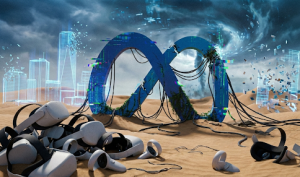
A full NFT market recovery is the single most critical question on every investor’s mind as 2025 draws to a close. The dizzying, speculative highs of 2021 feel like a distant memory, replaced by a brutal crypto winter that saw volumes collapse over 90%. For 2024 and most of 2025, the only story was survival.
But the sentiment is shifting. The speculative fever has broken, and in its place, a quieter, more resilient foundation is being built. The question has changed from if NFTs will survive to what their comeback will look like. All eyes are on 2026.
The “Great Washout”: What Precedes an NFT Market Recovery?
To accurately predict a 2026 NFT market recovery, we must be honest about where we are. The 2024-2025 period was a necessary, if painful, market correction that purged the ecosystem of unsustainable hype.
- Real Volume vs. Hype: While total trading volume is a shadow of its peak, data from industry trackers confirms a massive reduction in wash trading. The ~$1.5B – $2B in monthly volume seen in late 2025 is far more organic and ‘real’ than the inflated figures of 2021.
- A Core User Base: The number of unique active wallets (UAW) interacting with NFT contracts has finally stabilized. The “tourists” have left, leaving a dedicated base of true users and builders.
- Blue-Chip Transition: Even blue-chips like CryptoPunks and BAYC have found a stable floor. They are transitioning from pure speculative plays into ‘digital heritage’ brands.
This ‘great washout’ was the essential foundation for any sustainable NFT market recovery. It forced the industry to answer the critical question: ‘What is an NFT actually for?’
Key Drivers for the 2026 NFT Market Recovery
The comeback in 2026 will not be a 2021 repeat. It won’t be fueled by 10,000 new PFP collections. This comeback will be built on one thing: tangible utility.
The Gaming Catalyst: From “Play-to-Earn” to “Play-and-Own”
The old “play-to-earn” (P2E) model was flawed; it prioritized earning over fun. The new generation of Web3 games, many slated for full release in 2026, flips that script.
- High-Quality Titles: Games like Illuvium and Star Atlas are AAA-quality experiences where the blockchain elements are seamlessly integrated, not the main focus.
- True Ownership: The narrative is now “play-and-own.” Players will earn and buy in-game assets (skins, land) as NFTs, giving them verifiable ownership. This is a key pillar for the recovery of the NFT market, as it taps into the multi-billion dollar traditional gaming skins market.
The RWA Revolution: Tokenizing Real-World Assets
This is the most significant long-term driver: tokenizing Real-World Assets (RWAs). This means representing physical or traditional financial assets (real estate, bonds, art) as an NFT on a blockchain.
- Institutional Buy-In: TradFi giants like BlackRock and J.P. Morgan spent 2025 actively exploring this space. This signals the opening of floodgates for institutional capital and legitimacy.
- Fractional Ownership: This technology unlocks fractional ownership of high-value assets. Imagine owning $1,000 of a Picasso, represented by an NFT. This is where the NFT market recovery moves from a niche comeback to a multi-trillion dollar industry shift.
Utility 2.0: Ticketing, Loyalty, and Digital Identity
The technology is finally mature enough for mainstream use.
- Ticketing: Using NFTs as event tickets solves the massive problems of fraud and scalping. They also act as digital memorabilia that can unlock future perks.
- Brand Loyalty: Brands like Starbucks (with its ‘Odyssey’ program) have proven NFTs can create deep community engagement. This will become a new standard for loyalty programs.
- Digital Identity: Your university diploma, professional certifications, or even your passport could one day be a verifiable NFT that you control.
The Verdict: Is 2026 the Comeback Year?
So, is 2026 the year the NFT market reclaims its all-time highs?
The answer is a nuanced yes.
We are not going back to the speculative, PFP-driven mania of 2021. That bubble has burst, and the market is healthier for it.
Instead, 2026 is shaping up to be the year of the “Utility Comeback.” This NFT market recovery won’t be measured by JPG floor prices. It will be measured by the number of active users in Web3 games, the total value locked (TVL) in RWA-backed NFT protocols, and the number of global brands that integrate NFTs into their core business.
The “NFT winter” was never an end. It was an essential hibernation. As we head into 2026, the market is waking up, and it’s no longer just about digital art—it’s about the digital ownership of everything.
Disclaimer: This article is for informational purposes only and does not constitute financial or investment advice. The cryptocurrency and NFT markets are highly volatile. Please conduct your own research before making any investment decisions.