Zcash (ZEC) is one of the most important “privacy-first” cryptocurrencies—and it’s also one of the most misunderstood. While Bitcoin makes transactions transparent by design, Zcash gives users the option to keep transaction details private using advanced cryptography. In other words, Zcash is built for people who want the benefits of public blockchains without broadcasting their entire financial life.
However, privacy is never just a feature—it’s a trade-off. Therefore, this guide explains how Zcash privacy actually works, what changed with major upgrades like Blossom and NU5, how the Orchard shielded pool and Unified Addresses improved usability, and what risks investors should consider in 2026.
Zcash (ZEC) at a glance
- Ticker: ZEC
- Core idea: optional privacy via shielded transactions
- Privacy tech: zero-knowledge proofs (zk-SNARKs)
- Address types: transparent + shielded + Unified Addresses
- Supply model: capped supply with halving-style issuance (similar concept to Bitcoin)
Important: Zcash is not “always private.” Instead, it supports both transparent and shielded activity. That flexibility is powerful, yet it also means privacy depends on user choices and wallet support.
What is Zcash (ZEC)?
Zcash is a cryptocurrency designed to enable transactions with strong privacy protections. Unlike fully transparent chains, Zcash lets users choose between:
- Transparent transactions (similar to Bitcoin-style public visibility), and
- Shielded transactions where sensitive details can be hidden.
Because privacy can be optional, Zcash can serve multiple audiences. For instance, everyday users may want privacy for personal security, while businesses may want confidentiality for suppliers and payroll—provided they still follow local laws.
How Zcash privacy works (without the hype)
Zcash uses zero-knowledge proofs to prove a transaction is valid without revealing key details. In practice, a fully shielded transfer can conceal:
- the sender address
- the recipient address
- the amount sent
That said, privacy is only as strong as the overall “privacy set.” So, if few people use shielded transactions, privacy can be harder to blend into. Consequently, adoption and wallet UX matter almost as much as the cryptography.
Address types explained: transparent, shielded, and Unified Addresses
1) Transparent addresses
Transparent addresses work like classic public blockchain addresses. Therefore, anyone can follow the flow of funds on-chain if they can link an address to a person or entity.
2) Shielded addresses and shielded pools
Shielded addresses interact with Zcash shielded pools. Notably, modern Zcash privacy is centered around the Orchard shielded protocol, which is part of the NU5-era design.
3) Unified Addresses (big usability upgrade)
Unified Addresses (UA) were introduced to reduce confusion and improve compatibility. Instead of forcing users to pick a single address format, a UA can bundle multiple receiver types so wallets can choose the best one supported by the sender and recipient.
As a result, Unified Addresses make it easier to move toward privacy without breaking everyday usability—especially across different wallets and exchanges.
Major Zcash upgrades you should know
Blossom: faster target block times
Zcash implemented the Blossom network upgrade to improve performance assumptions around block timing. Specifically, Blossom moved to a shorter target block interval (commonly referenced as 75 seconds), which affects how users experience confirmations and how the chain progresses.
NU5: Orchard + Unified Addresses
NU5 is a milestone upgrade because it formalized the move to the Orchard shielded pool and enabled key UX improvements like Unified Addresses. In the protocol documentation, NU5 deployment details include activation parameters at the consensus layer.
NU6.1: ongoing protocol evolution
Zcash continues to evolve through scheduled network upgrades. For example, documentation for NU6.1 indicates an activation date of November 24, 2025, showing the project’s ongoing maintenance and protocol iteration.
ZEC tokenomics: supply, issuance, and halving dynamics
Zcash follows a capped-supply model commonly described as similar in spirit to Bitcoin’s issuance approach. That said, what matters for investors is the emissions path (new supply entering the market) and how it changes over time.
Additionally, Zcash has historically followed a halving-style issuance pattern. Therefore, the rate of new ZEC issuance declines periodically, which can affect miner economics, liquidity, and long-term supply pressure.
Note: Exact halving dates can vary slightly due to real-world block timing. Still, public analyses often model the next halving window around late 2028 based on historical cadence.
The Development Fund: how Zcash funds ongoing work
Zcash includes a structured approach to funding development. For instance, ZIP-1014 (“Zcash Development Fund”) outlines a model that allocates part of the block subsidy to support ecosystem development, including designated recipients and grant structures.
Moreover, the project’s funding approach has been revisited over time. Electric Coin Co. discussed a Dev Fund Extension around the 2024-era transition, illustrating how governance and sustainability are handled in practice.
What Zcash is good for (real use cases)
- Personal financial privacy: avoiding public exposure of balances and spending habits.
- Operational privacy for businesses: reducing competitive intelligence leakage (where legally permitted).
- Safer donations and payments: protecting recipients in sensitive contexts.
- On-chain privacy research: Zcash remains a reference point for privacy engineering and ZK design.
Meanwhile, it’s worth repeating: privacy tech can attract regulatory attention. So, exchange support and jurisdictional rules can materially affect liquidity.
Key risks and red flags for Zcash investors
1) Regulatory and exchange risk
Privacy coins can face restrictions in certain jurisdictions. Consequently, listings may change, and access can vary by country and compliance posture.
2) Wallet UX and shielded adoption
Zcash privacy benefits depend on shielded usage and wallet support. Therefore, improvements like Unified Addresses matter—but adoption still takes time.
3) Security hygiene matters more than ever
Even the best privacy tech won’t save you from basic mistakes. For example, seed phrase phishing remains the #1 threat to everyday users.
Start here for a clean baseline: Ultimate crypto security guide (self-custody) and then set up safe storage using: How to create a crypto wallet.
How to buy and store ZEC safely
Buying ZEC
Typically, users buy ZEC on centralized exchanges, then withdraw to a wallet for long-term control. If you’re choosing an exchange, focus on security tooling and transparency first:
Best crypto exchanges (review & comparison)
Storing ZEC
If you’re holding meaningful value, consider separating “spending” and “savings.” Additionally, hardware wallets can reduce online attack surface for long-term holdings:
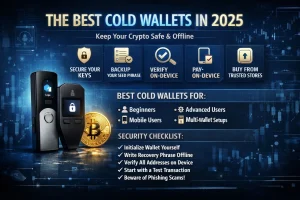
Best cold wallets (hardware) guide
Security tip: On exchanges, if a withdrawal allowlist feature exists, enabling it can reduce the risk of a hacked withdrawal destination.
FAQ: Zcash (ZEC) quick answers
Is Zcash private by default?
No. Zcash supports both transparent and shielded activity. Therefore, privacy depends on using shielded functionality where supported.
What changed with NU5?
NU5 formalized modern privacy UX improvements, including the Orchard shielded protocol and Unified Addresses, alongside protocol-level deployment details.
Why do Unified Addresses matter?
They reduce friction. Instead of guessing which address format to use, a Unified Address can advertise multiple receiver types so wallets can negotiate compatibility more smoothly.
Is Zcash still actively maintained?
Yes—Zcash continues to ship upgrades. For example, NU6.1 documentation specifies a 2025 activation date, which indicates ongoing protocol iteration.
Final takeaway
Zcash remains one of the most serious privacy-focused crypto projects, especially for users who want optional privacy rather than a one-size-fits-all design. Still, smart investors should evaluate Zcash through two lenses: privacy engineering (what the protocol enables) and market reality (regulation, exchange access, wallet UX, and adoption).
Disclosure: This article is for informational purposes only and does not constitute investment, legal, or tax advice. Crypto is volatile and risky; do your own research and consider your risk tolerance.
Sources
- Zcash Improvement Proposals (ZIPs) — ZIP-316 “Unified Addresses”
- Zcash Improvement Proposals (ZIPs) — ZIP-224 “Orchard Shielded Protocol”
- Zcash Improvement Proposals (ZIPs) — ZIP-252 “Deployment of the NU5 Network Upgrade”
- Zcash Improvement Proposals (ZIPs) — ZIP-320 “Deployment of the NU6.1 Network Upgrade”
- Zcash Improvement Proposals (ZIPs) — ZIP-1014 “Zcash Development Fund”
- Electric Coin Co. — “Blossom” network upgrade documentation
- Electric Coin Co. — “Dev Fund Extension” discussion
- Corporate Finance Institute — Zcash overview and supply model
- Galaxy Research — Zcash halving timing analysis