


Bitcoin: The Future of Wealth or the Greatest Scam in History?
The global financial landscape reached a point of unprecedented polarization on February 1, 2026. As the morning sun rose over the financial districts from New York to Mumbai, the digital asset...

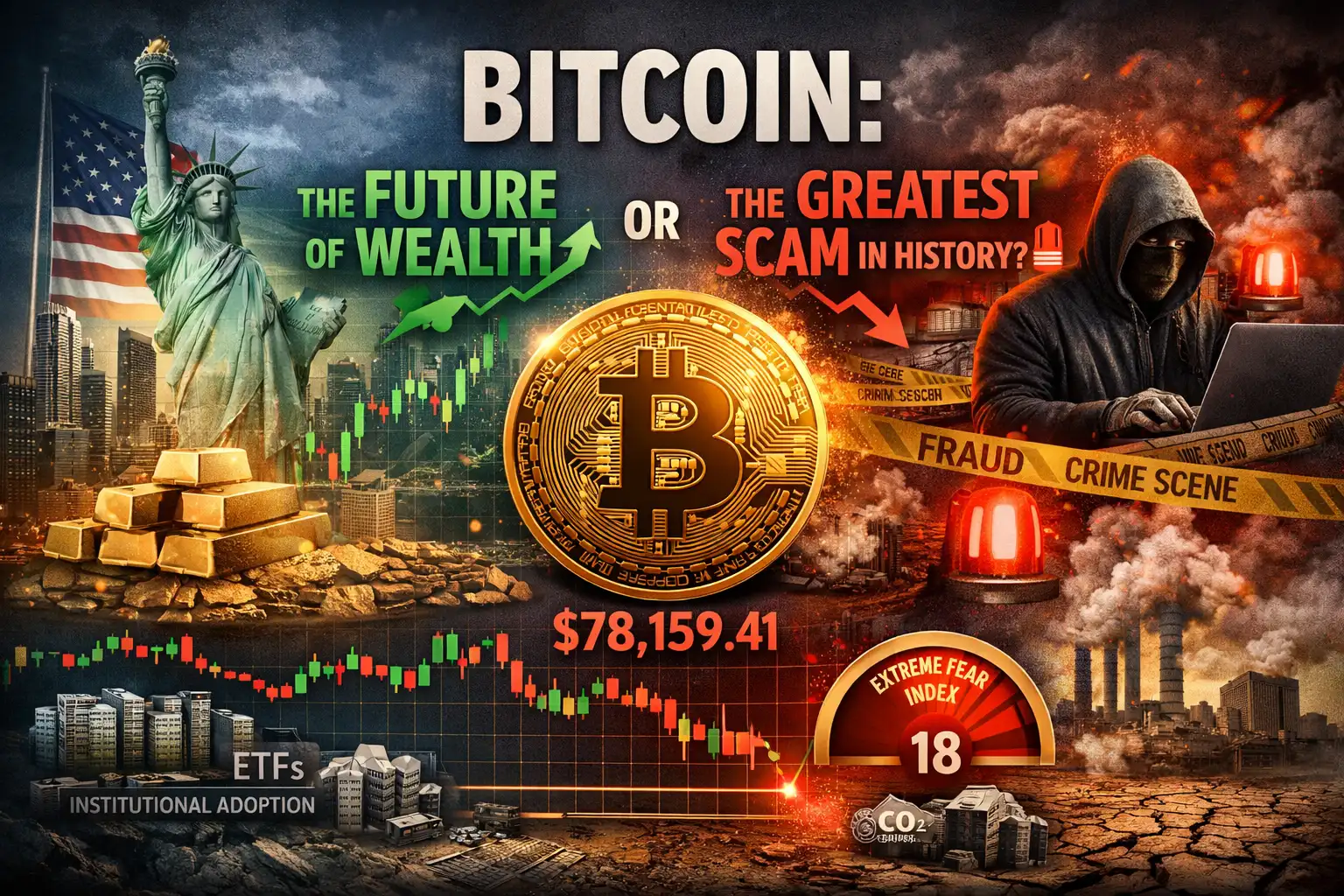
The global financial landscape reached a point of unprecedented polarization on February 1, 2026. As the morning sun rose over the financial districts from New York to Mumbai, the digital asset markets were reeling from a weekend that challenged every foundational belief regarding the nature of money in the twenty-first century. Bitcoin, the enigmatic pioneer of decentralized finance, had just experienced a harrowing descent, breaching the psychological and structural floor of $80,000 to touch intraday lows of $78,159.41. This sudden evaporation of value marking a decline of over 30% from its October highs and nearly 20% from its mid-January peak has reignited a debate that has simmered for over a decade: is Bitcoin the ultimate store of value for a digital age, or is it the most sophisticated, multi-trillion-dollar mirage in human history?.
Table Of Content
- The Anatomy of a Market Watershed: February 1, 2026
- The Warsh Shock and the Federal Reserve Pivot
- The Commodity Chaos Correlation
- Comparative Performance Analysis: The Early 2026 Volatility Window
- The Case for the Future of Wealth: Sovereign and Institutional Foundations
- The Rise of the Sovereign Bitcoin Reserve
- Sovereign Bitcoin Holdings: 2026 Global Landscape
- The Institutional Engine: From Retail to Corporate Treasuries
- Technological Utility: The Lightning Network and Scalability
- Real-World Adoption and ROI
- The Case for the “Greatest Scam”: Scams, Fraud, and Industrialized Crime
- The $17 Billion Fraud Epidemic
- Security Breaches and Systemic Risks
- The Environmental Crisis: The Physical Cost of Digital Wealth
- The Energy Consumption of a G20 Nation
- India’s Regulatory Tightrope: A Case Study in Tension
- Taxation as a Tool of Containment
- Economic Analysis: Bitcoin vs. Gold vs. S&P 500
- The 2026 Market Shift
- Future Price Projections: A Divergent Outlook
- The Synthesis of a Digital Paradigm
The Anatomy of a Market Watershed: February 1, 2026
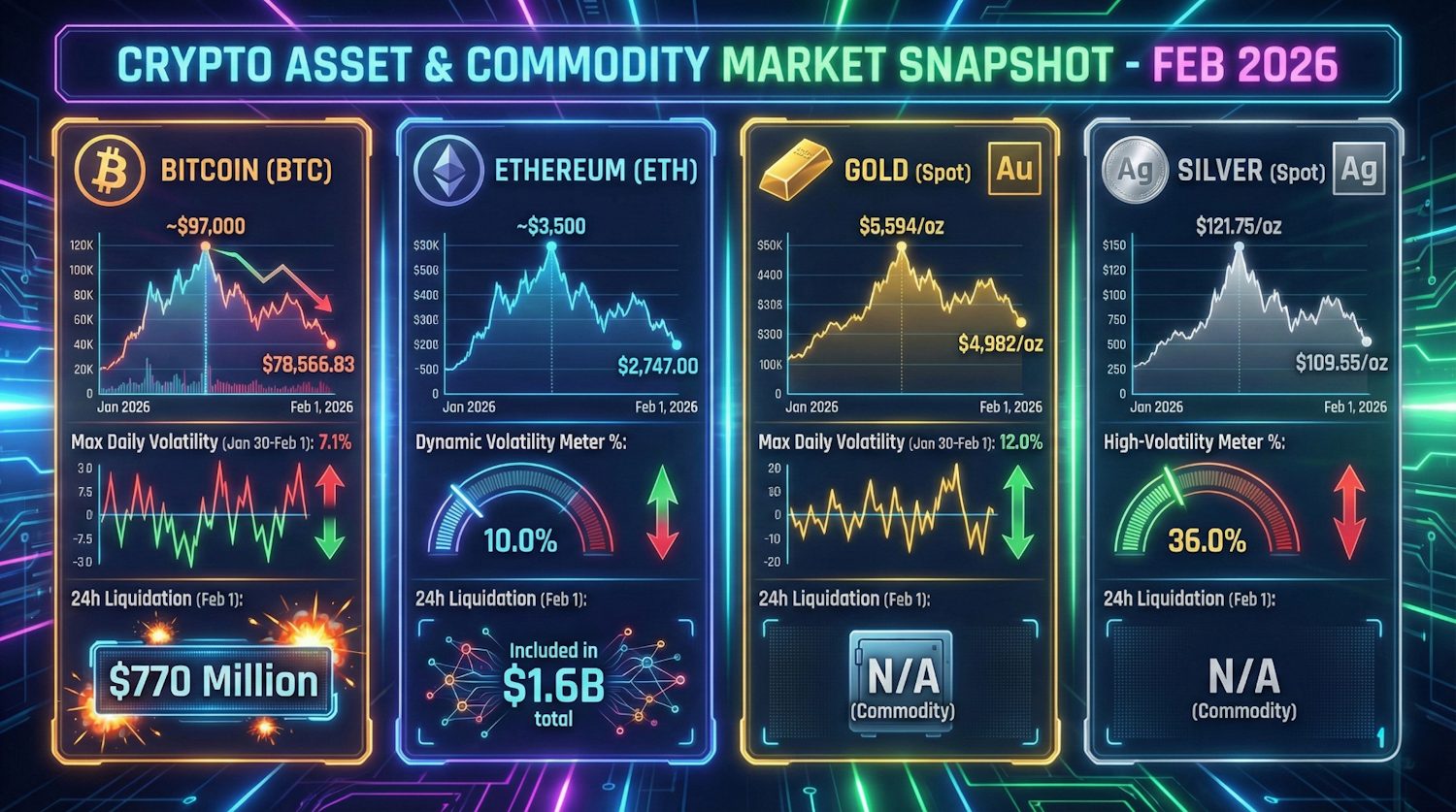
The market action in the first weeks of 2026 has been nothing short of cinematic. After a period of “golden era” optimism fueled by political shifts in the United States and the formalization of sovereign Bitcoin reserves, the reality of macroeconomic gravity has reasserted itself with a vengeance. On February 1, Bitcoin’s price action was characterized by “weak buying interest and thin trading volumes,” which left the asset vulnerable to a massive selloff. The total crypto market capitalization, which had recently flirted with the $3 trillion mark, slid to approximately $2.66 trillion as $1.6 billion in leveraged positions were liquidated in a single 24-hour window.
The Warsh Shock and the Federal Reserve Pivot
The primary catalyst for this “risk-off” migration was not found on a blockchain, but in the halls of the White House. The nomination of former Federal Reserve Governor Kevin Warsh to replace Jerome Powell as the Chair of the US central bank sent ripples of anxiety through the speculative asset classes. Warsh is widely regarded as a hawk who favors a significant “regime change” in monetary policy, specifically advocating for a smaller Federal Reserve balance sheet and a tightening of the liquidity that has historically served as the lifeblood for high-growth, speculative assets like Bitcoin.
Market participants, particularly those managing large institutional portfolios, reacted to the Warsh nomination by reassessing the “Fed-infused liquidity” that had supported Bitcoin’s rise toward $100,000. The fear is simple yet profound: if the era of “easy money” is ending, the premium placed on assets with no traditional cash flow—like Bitcoin—must necessarily contract. This sentiment shift pushed the Crypto Fear & Greed Index into “Extreme Fear” territory, registering a 18/100 as forced selloffs and key support breaks fueled a cycle of risk aversion.
The Commodity Chaos Correlation
Adding a layer of complexity to this narrative was the historic “metals meltdown” that occurred just forty-eight hours prior. On January 30, 2026, the traditional safe-haven markets experienced a total capitulation. Gold, which had reached a record high of $5,594 per ounce, suffered its worst daily decline since the early 1980s, falling over 12%. Silver was hit even harder, crashing 36% in its biggest intraday decline ever, falling from a high of $420,000 per kg on the MCX to below the ₹3 lakh mark.
For Bitcoin, this correlation was a double-edged sword. Proponents had long argued that Bitcoin would serve as “digital gold,” attracting capital during periods of fiat currency uncertainty. However, during the January 30 crash, Bitcoin did not act as a safe haven. Instead of absorbing the capital fleeing the precious metals rout, Bitcoin stayed flat or declined, failing to attract fresh inflows even as gold and silver saw a massive reversal. This failure to decouple from the broader risk-on sentiment has provided significant ammunition to the “scam” or “bubble” theorists, who argue that Bitcoin is merely a high-beta play on global liquidity rather than a legitimate hedge against currency debasement.
Comparative Performance Analysis: The Early 2026 Volatility Window
The Case for the Future of Wealth: Sovereign and Institutional Foundations
Despite the immediate price volatility, a compelling argument for Bitcoin as the “Future of Wealth” is built on the foundation of institutionalization and sovereign adoption that reached a fever pitch in 2025 and 2026. This is no longer an asset class relegated to the dark corners of the internet; it is now a matter of national strategic policy and corporate balance sheet management.
The Rise of the Sovereign Bitcoin Reserve
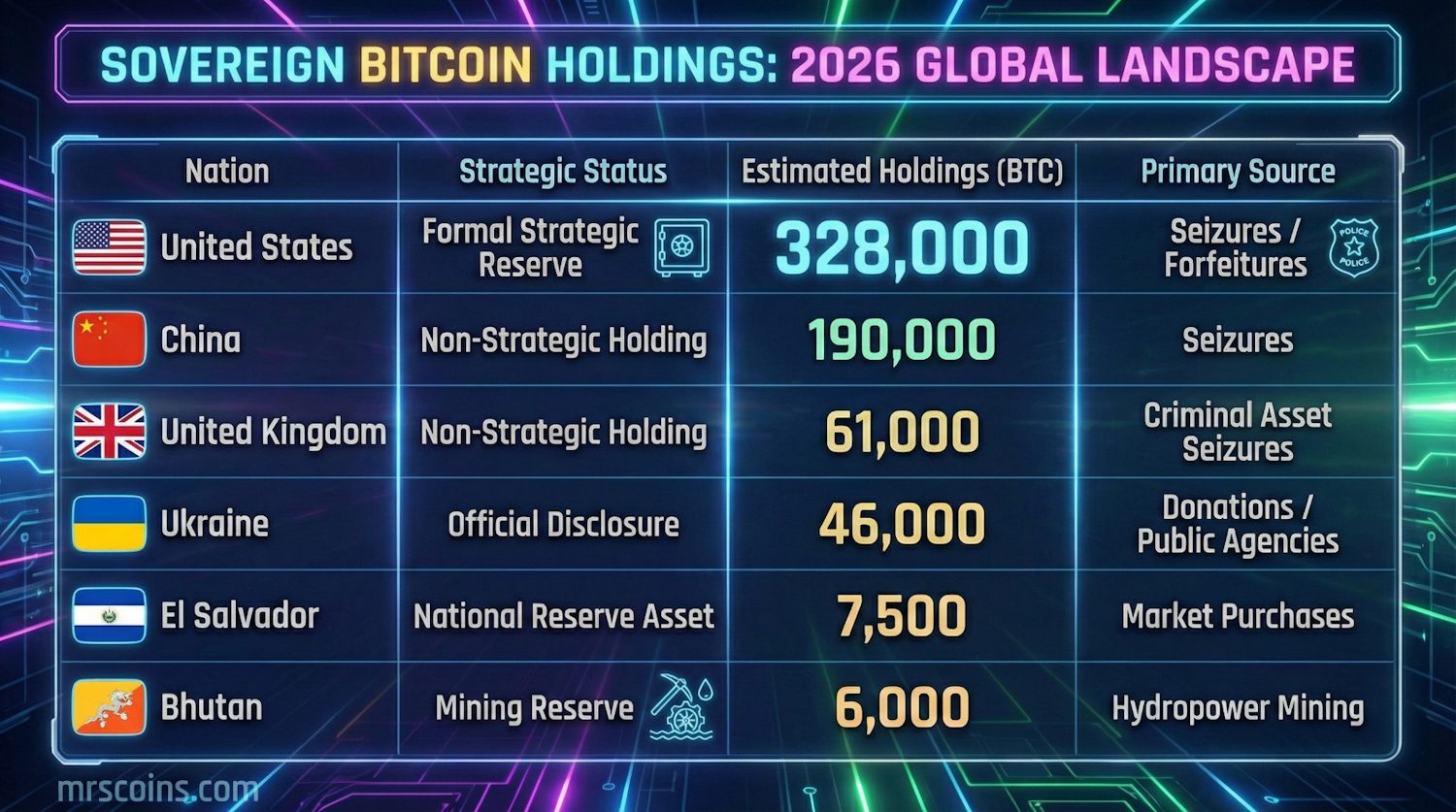
The most transformative development in the history of the asset was the formal establishment of the United States Strategic Bitcoin Reserve in early 2026. Following a policy shift initiated by the Trump administration in 2025, the U.S. government moved from a stance of liquidating seized digital assets to one of “long-term sovereign custody”. By March 2026, the U.S. formally classified its holdings of approximately 328,000 BTC—primarily acquired through law-enforcement forfeitures—as a strategic national asset.
This move signaled a “geopolitical FOMO” among nations. Pakistan followed suit in 2026, announcing its own government-led Strategic Bitcoin Reserve to be funded through state-linked mining operations. Bhutan had already been quietly accumulating wealth through hydropower-backed mining, holding approximately 6,000 BTC by 2026. When the world’s largest economy and several emerging powers begin to treat an asset as a strategic reserve, the “scam” narrative faces a significant logical hurdle: why would sovereign states, with access to the most sophisticated economic intelligence in the world, commit to a fraudulent architecture?
Sovereign Bitcoin Holdings: 2026 Global Landscape
The accumulation of 784,582 BTC by U.S. spot ETFs and the projection of over 260,000 crypto millionaires by 2026 further underscore the widening distribution of this wealth. Institutional flows into spot ETFs, led by BlackRock and Fidelity, saw record net inflows of $385.9 million in single weeks during early 2026, indicating that professional capital is increasingly viewing Bitcoin as a necessary component of a modern portfolio.
The Institutional Engine: From Retail to Corporate Treasuries
JPMorgan analysts, led by Nikolaos Panigirtzoglou, have noted a significant shift in the composition of crypto inflows. While 2025 saw a record $130 billion enter the space, much of it was retail-led or driven by existing digital asset treasuries (DATs). However, the forecast for the remainder of 2026 suggests that institutional investors will take the lead, facilitated by new regulatory frameworks like the “Clarity Act” in the U.S..
This regulatory clarity is expected to trigger a wave of corporate activity, including venture capital funding, mergers and acquisitions, and initial public offerings in the blockchain infrastructure, custody, and stablecoin sectors. When public companies add Bitcoin to their corporate balance sheets—as seen with firms like MicroStrategy—they are effectively betting on the asset’s longevity as a store of value. For these entities, Bitcoin represents a hedge against the “debasement trade” and the fiscal sustainability of the $37 trillion U.S. public debt.
Technological Utility: The Lightning Network and Scalability
A central pillar of the “scam” argument has always been Bitcoin’s perceived lack of utility—the idea that it is too slow and too expensive to be used for anything other than speculation. However, the data from 2025 and 2026 suggests that Bitcoin is undergoing a massive technological evolution, primarily through Layer 2 scaling solutions like the Lightning Network.
Real-World Adoption and ROI
The Lightning Network, designed to facilitate near-instant, low-cost payments over the Bitcoin blockchain, has transitioned from a theoretical concept to a robust enterprise tool. By early 2026, major platforms like Coinbase and Cash App have fully integrated Lightning, with Cash App reporting that one in four Bitcoin payments is now processed over the network.
The impact on business operations is measurable. For example, the firm Geyser reached a 98% adoption rate for Lightning transactions within its ecosystem, while Xapo Bank achieved 23% adoption within just one year of launch. For these businesses, the “Future of Wealth” is not just about the price of the token, but about the efficiency of the payment rail. Lightning transactions settle in milliseconds and cost fractions of a cent, removing the “10-minute confirmation bottleneck” and the high fees associated with the main Bitcoin chain.
The Case for the “Greatest Scam”: Scams, Fraud, and Industrialized Crime
While the institutional and technological stories are compelling, the “Greatest Scam” narrative is reinforced by the staggering scale of fraud and criminal activity that continues to plague the sector. For many critics, the decentralized nature of Bitcoin is not a feature of freedom, but a bug that facilitates a “wild west” of exploitation.
The $17 Billion Fraud Epidemic
In 2025, an estimated $17 billion was stolen through crypto scams and fraud—a figure that represents a significant portion of the total market’s annual inflows. Most alarming is the “industrialization” of these scams. Impersonation fraud, often utilizing sophisticated AI-enabled deepfakes, saw a massive 1400% year-over-year growth. AI-enabled scams were found to be 4.5 times more profitable than traditional methods, allowing scammers to build trust and exploit victims at scale.
The “Finder-Chatter-Killer” model, identified in cybercrime hubs in Myanmar and other parts of Southeast Asia, illustrates the calculated cruelty of these operations:
- The Finder: Scours social media to identify vulnerable targets.
- The Chatter: Spends months building an emotional or professional bond with the victim.
- The Killer: Convinces the victim to “invest” in a fake crypto application that displays phantom gains but prevents any actual withdrawals, eventually disappearing once the victim’s life savings are drained.
For the victims of these operations, Bitcoin is not the “Future of Wealth”—it is the instrument of their financial ruin. The lack of a central authority to reverse these transactions makes Bitcoin the perfect tool for modern-day highwaymen, leading many to view the entire ecosystem as a facilitator for global crime.
Security Breaches and Systemic Risks
The technical complexity of self-custody remains a significant barrier to the “wealth” narrative. In 2025, security breaches across the crypto sector resulted in losses exceeding $2.2 billion. These were not just individual lapses in judgment, but sophisticated hacks of decentralized protocols and exchanges. The persistent vulnerability of “hot wallets” and the complexity of managing private keys mean that for a large portion of the population, “being your own bank” is more of a liability than an asset.
Furthermore, the rise of ransomware continues to be inextricably linked to the Bitcoin economy. The movement of proceeds from fraud and ransomware remains the most prevalent form of money laundering involving virtual assets. To those who prioritize social order and consumer protection, an asset class that serves as the primary engine for global extortion is, by definition, a scam against the public interest.
The Environmental Crisis: The Physical Cost of Digital Wealth
One of the most potent arguments against Bitcoin’s longevity is its environmental footprint. As the network grows, so too does its thirst for energy—a demand that critics argue is fundamentally incompatible with the global transition toward sustainability.
The Energy Consumption of a G20 Nation
By 2026, if Bitcoin were a country, its annual energy consumption would rank it 27th in the world, ahead of Pakistan, a nation of over 230 million people. Estimates for the total energy demand of the network in 2026 range from 142 TWh to as high as 1,000 TWh if current trends in difficulty and hardware expansion continue.
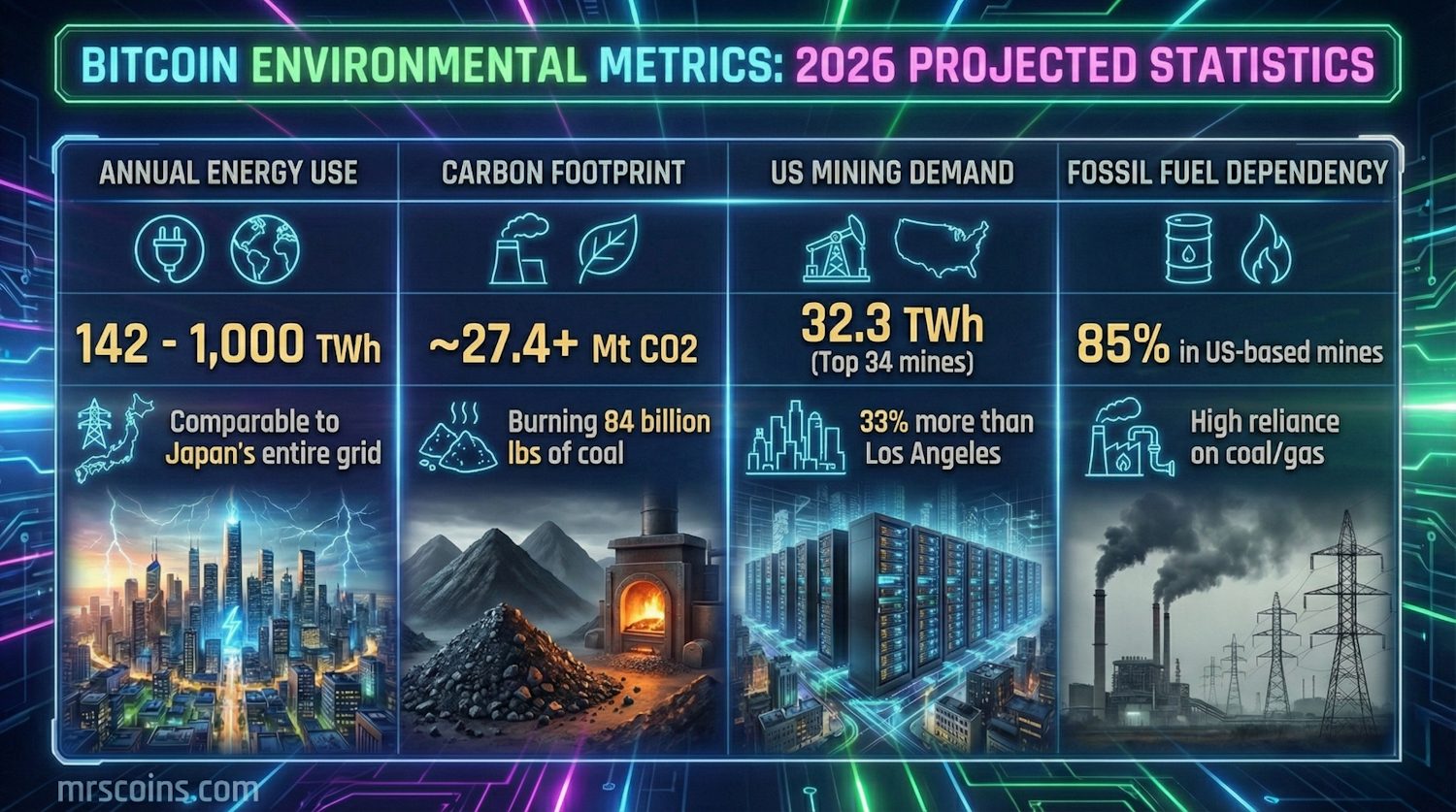
The carbon footprint resulting from this energy use is equivalent to operating 190 natural gas-fired power plants. While proponents argue that Bitcoin mining can incentivize the development of renewable energy by acting as a “buyer of last resort” for stranded energy, the current reality in 2026 shows a heavy reliance on fossil fuels. In the United States, 85% of the energy consumed by the 34 largest mines comes from fossil fuels. Critics argue that creating “wealth” by accelerating the climate crisis is the ultimate “greater fool” scam, shifting the costs from the speculators to the rest of the planet.
India’s Regulatory Tightrope: A Case Study in Tension
India has emerged as one of the most significant battlegrounds for the Bitcoin narrative. The country leads the 2025 Global Crypto Adoption Index, with a “phenomenal increase” in transaction volume driven by a young, tech-savvy population and a robust digital payments ecosystem (UPI). However, the Indian government’s approach in Budget 2026 reflects a deep-seated skepticism that borders on hostility.
Taxation as a Tool of Containment
The formal recognition of Virtual Digital Assets (VDAs) in India’s tax system began with a flat 30% tax on all gains, regardless of income slab. This was accompanied by a 1% Tax Deducted at Source (TDS) on all transactions, a measure that industry experts claim has “adversely impacted liquidity, widened bid-ask spreads, and pushed trading volumes to offshore platforms”.
In Budget 2026, the government doubled down on this “high-friction” model. New reporting obligations under Section 285BAA require crypto exchanges and wallet providers to submit periodic statements of user activity to the Income Tax Department, effectively ending any hopes of anonymity. Furthermore, Section 509 of the Income Tax Act now imposes daily penalties on platforms for reporting lapses, signaling that the state’s primary goal is not to encourage the “Future of Wealth,” but to ensure that every satoshi is accounted for and taxed.
Economic Analysis: Bitcoin vs. Gold vs. S&P 500
As we navigate through 2026, the strategic roadmap for investors has become more complex. Following a highly accurate forecast for 2024 and 2025, the focus has shifted to the “strategic rotation” of capital.
The 2026 Market Shift
Contrary to the “hyper-bitcoinization” theories of some bulls, early 2026 has seen a “subtle rotation” back toward traditional stores of value. Polymarket data indicates that traders now favor gold over Bitcoin for the coming year, with a 45% probability that gold will be the top performer compared to 36% for Bitcoin and a mere 17% for the S&P 500.
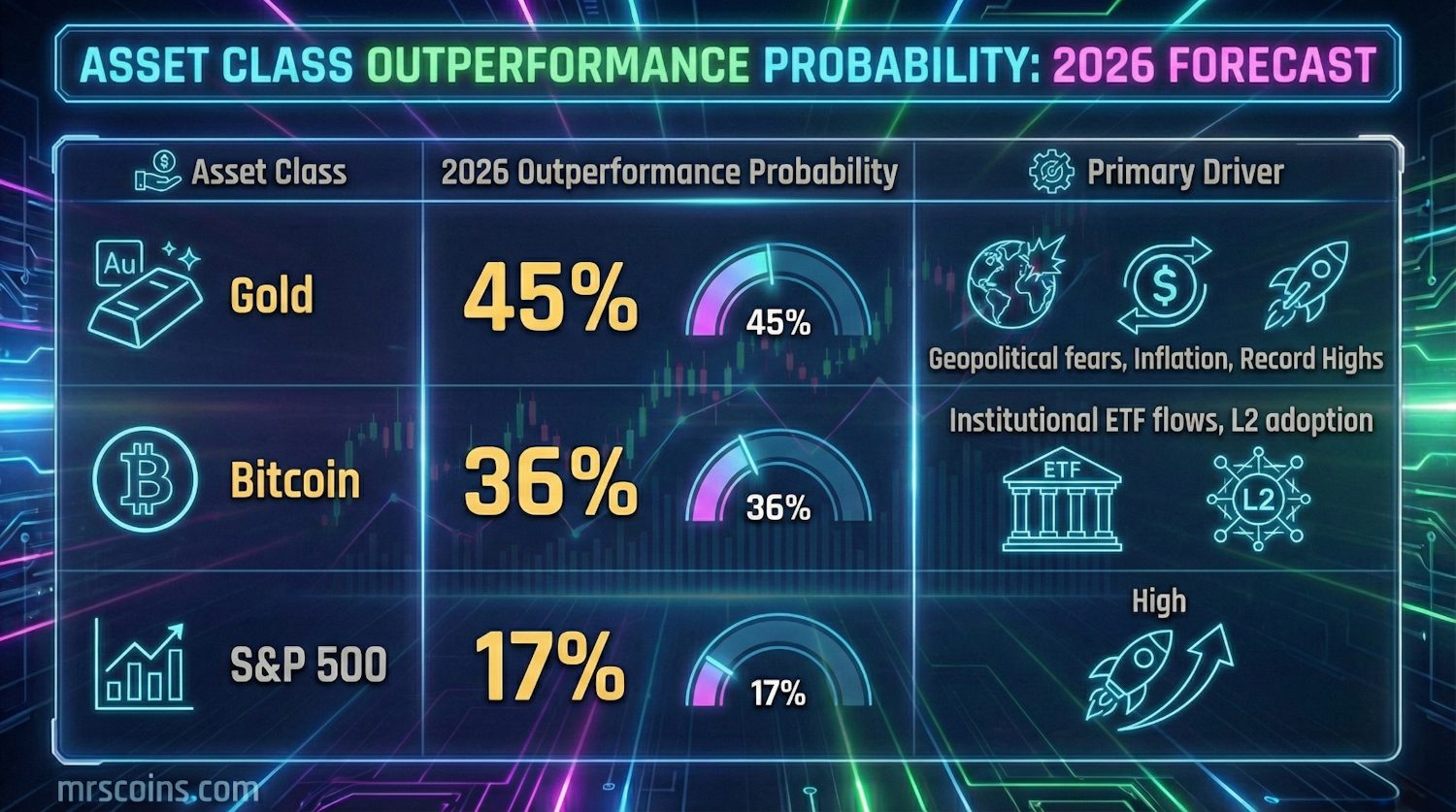
This shift is driven by a “return to basics.” While Bitcoin remains a primary choice for growth-focused investors, its “inherent volatility deters risk-averse investors” who are increasingly looking for a “portfolio anchor” amid the instability of the Trump administration’s trade policies and tensions in the Middle East. JPMorgan’s “volatility-adjusted model” suggests that Bitcoin is currently trading below its “fair value” relative to gold, with a gap of approximately $68,000—yet this gap exists precisely because of the asset’s unpredictable nature.
Future Price Projections: A Divergent Outlook
The forecasts for Bitcoin’s price by 2030 are as polarized as the “Future vs. Scam” debate itself. On one end, firms like Bernstein and Standard Chartered see a “tokenization supercycle” pushing Bitcoin to $150,000 or $200,000 by 2027. Cathie Wood of ARK Invest maintains an aggressive bull case of $2.4 million by 2030, based on institutional adoption and Bitcoin’s role as a decentralized global monetary system.
Conversely, skeptics like Marko Kolanovic have warned that the rapid increase in crypto prices may be unsustainable, suggesting a potential 50% fall if speculative forces unwind. The market is currently “caught between lingering macro caution and selective bargain-hunting,” with repeated failures to sustain moves above the low-$90,000s in early 2026 highlighting the fragile nature of this wealth.
The Synthesis of a Digital Paradigm
As of February 1, 2026, the question of whether Bitcoin is the “Future of Wealth” or the “Greatest Scam in History” cannot be answered with a simple binary. The reality is far more nuanced: Bitcoin has become a dual-natured entity.
To the sovereign state building a strategic reserve, to the public company hedging against dollar debasement, and to the millions of people using the Lightning Network for near-instant global payments, Bitcoin is undeniably the Future of Wealth. It is a technological achievement that has forced the world to reconsider the definition of money and the necessity of central intermediaries.
However, to the victim of an AI-enabled “killing” scam, to the environment suffering from the carbon emissions of a global mining fleet, and to the trader wiped out by $1.6 billion in liquidations triggered by a Federal Reserve nomination, Bitcoin represents the Greatest Scam. It is a high-volatility, energy-intensive casino that lacks the consumer protections and social safeguards of the traditional financial system it seeks to replace.
The events of early 2026—the “Warsh Shock,” the commodity crash, and the sovereign reserve race—all point to a single conclusion: Bitcoin is now a permanent fixture of the global economy. It is no longer “too small to fail” or “too obscure to care about.” Whether it is a revolutionary tool for financial liberation or a predatory trap for speculative capital, the wealth it has created (and destroyed) is very real. The future of Bitcoin lies in whether the technological utility and institutional discipline can outpace the fraud, crime, and environmental costs that currently haunt its legacy. For now, the only certainty is that in the world of Bitcoin, there are no “second chances” for those who fail to respect the sheer force of its volatility.