Svardin is a name that has started appearing in crypto circles alongside claims about payments infrastructure, smart-contract powered settlement, and “Layer-2 efficiency.” If you’re researching Svardin as a token or protocol, the most important thing to understand first is this: your edge isn’t speed, it’s verification. Early-stage crypto projects often publish polished narratives before the market has enough on-chain history, listings, audits, or independent coverage to confirm the full picture.
This guide explains what Svardin claims to be, how to verify the token and ecosystem safely, and how to evaluate risks—without hype and without assuming anything is true until you confirm it yourself.
Quick take: What is Svardin?
In publicly available materials, Svardin is described as a crypto project focused on enabling more flexible payments and smart-contract based exchange flows. The narrative typically includes:
- Payments / settlement tooling: enabling merchants or apps to accept different tokens while settling into a preferred asset.
- Smart-contract execution: swaps or conversions handled by contracts (instead of manual off-chain processes).
- “Layer-2” framing: references to using Ethereum security assumptions with a faster execution layer.
Important: Names and tickers can be confusing in crypto. Before you do anything—buy, bridge, connect a wallet, or “claim an airdrop”—you must verify you’re looking at the correct project and the correct contract address.
Why Svardin gets attention in 2025–2026 narratives
Crypto cycles reward stories that map to real user pain. Payment + settlement narratives are attractive because they touch:
- Merchant acceptance: “Let users pay with what they hold.”
- Stable settlement: “Settle into a stablecoin or a base asset.”
- UX simplification: fewer manual swaps and fewer steps.
That said, a good narrative is not the same as a proven product. Your job is to separate “story” from “system.”
How to verify Svardin safely (the checklist most investors skip)
1) Confirm the official contract address (and don’t trust random screenshots)
Only treat a token as “real” after you confirm the contract address via multiple independent channels. Practical steps:
- Find the project’s official website + official social accounts.
- Locate the contract address in a place that is hard to spoof (e.g., a pinned post, official docs, a verified explorer link).
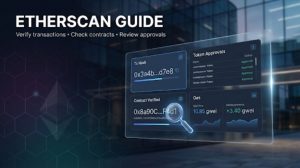
- Open the address on the relevant block explorer (Ethereum / Polygon / BSC / etc.).
- Check for contract verification, basic activity, and whether the token appears to be a standard implementation.
Red flag: “Contract address changes” or the team says “use this new address” without a clear migration plan and on-chain transparency.
2) Identify the chain and the correct ecosystem
Some projects claim to be “Layer-2” while actually operating as:
- a token deployed on a popular chain,
- a set of smart contracts using a DEX router,
- or a middleware service branding itself as infrastructure.
For Svardin, treat the “L2” label as a hypothesis until you confirm:
- Which chain(s) it actually runs on.
- Whether there is a real rollup or a security model beyond “we use X chain.”
- Whether the team has technical documentation describing architecture and trust assumptions.
3) Verify token economics (not just supply numbers)
Early-stage tokens often publish simple stats like supply or “burn” mechanisms. What matters more is distribution and control. Verify:
- Top holders concentration: are a few wallets controlling most supply?
- Vesting / unlocks: are there looming unlock cliffs that can create sell pressure?
- Liquidity quality: is liquidity locked, deep enough, and distributed across venues?
- Admin keys: can contracts be upgraded, paused, or drained by privileged roles?
Long-tail keyword angle: If you’re searching “is Svardin a good investment” or “Svardin tokenomics explained,” the correct answer starts with distribution, unlocks, and admin privileges—not with price predictions.
4) Look for real integrations (not logo walls)
Payment narratives often rely on partnerships. Verify integrations by looking for:
- merchant or app announcements from the partner side (not just from the project),
- on-chain evidence of usage (contract interactions, volume, unique wallets),
- documentation that explains the integration path (APIs, SDKs, settlement flow).
Red flag: “Partnership” means “we talked” rather than “we shipped.”
How a “multi-token payments + settle-to-one-asset” system typically works
To evaluate Svardin’s claims, it helps to understand the generic architecture such systems use:
Step A: User pays in Token X
A user holds Token X (or stablecoin Y) and wants to pay for a product/service. The checkout flow triggers a transaction signature.
Step B: Smart contract routes a conversion (swap)
The system routes a swap through a DEX or liquidity venue. Key variables:
- slippage protection,
- price source / oracle trust,
- MEV and sandwich attack exposure,
- revert conditions if price moves too far.
Step C: Merchant settles in Asset Z
The merchant prefers to settle in a specific asset (often a stablecoin). Settlement can happen instantly on-chain or with an off-chain accounting layer (which reintroduces trust).
Where things break in practice
- Liquidity risk: thin pools can cause bad execution.
- Oracle risk: manipulated prices can trigger unfair swaps.
- Approval risk: users grant token spending permissions that outlive the transaction.
- Custody risk: if any step becomes off-chain, “trust” returns.
If Svardin’s pitch is payments infrastructure, your evaluation should focus on execution safety as much as features.
Security risks specific to “payment + swap” style protocols
These are the most common ways users lose funds even without being “hacked” directly:
1) Token approvals that persist
Many apps require an approval to let a contract spend your tokens. If the contract (or a malicious imitation) gets broad approvals, funds can be drained later.
2) Fake front-ends
Attackers clone the UI, buy ads, and trick users into connecting wallets. Always double-check domain names and use bookmarks.
3) Airdrop bait + signature traps
“Claim” pages often hide malicious signature requests. If you didn’t ask for an airdrop, assume it’s a trap.
4) Liquidity manipulation / MEV
Payment swaps are targets for MEV. Without strong slippage controls and good routing, users get poor execution.
For a deep self-custody and wallet safety framework, read our full guide: Ultimate Crypto Security Guide: Self-Custody.
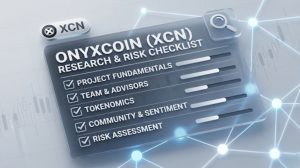
How to research Svardin like a pro (in 15 minutes)
- Find the official contract address and open it on a block explorer.
- Check holder concentration and recent large transfers.
- Look for verified contracts and whether the code is audited or at least verified.
- Check liquidity on the main venue(s): depth, lock status, and volatility.
- Confirm the official community channels and look for consistent announcements over time.
- Search for independent coverage that cites on-chain facts (not just marketing).
FAQ: Svardin (common questions)
Is Svardin listed on major trackers?
Listings can change quickly and sometimes a project appears first on smaller trackers before it reaches bigger platforms. Treat “not listed yet” as a reason to increase caution, not as a bullish signal.
What is the Svardin token ticker?
Always verify ticker and contract address together. Tickers can overlap across unrelated projects. The contract address is the primary truth.
Is Svardin safe?
No one can honestly guarantee “safe” in crypto. You can reduce risk by confirming verified contracts, understanding admin privileges, using small test transactions, and avoiding unknown links.
How do I store Svardin securely if I decide to hold it?
Use a reputable wallet and consider cold storage for larger amounts. If you’re new, start here: How to Create a Crypto Wallet and Best Cold Wallets (Security Review).
Practical risk management (especially for small-cap tokens)
- Position sizing: treat high-uncertainty tokens as speculative.
- Use a separate wallet: isolate experimental activity from your main holdings.
- Test first: tiny test tx before any larger move.
- Limit approvals: avoid unlimited approvals unless absolutely necessary.
- Exit plan: know what would make you reduce risk (unlock events, liquidity changes, admin key changes).
If you want to compare “high-risk / high-upside” tokens with a structured approach, this can help: Crypto Bubbles Explained.
Final thought
Svardin might turn into a useful payments-layer story—or it might remain mostly narrative. The outcome depends on what you can verify: contracts, integrations, on-chain usage, and transparent governance. In crypto, your research process is your defense system. Use it.