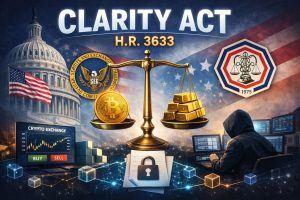
Coinbase has significantly increased its political and legal pressure on Washington as the 2026 legislative calendar tightens. The exchange operator is moving beyond simple advocacy, now demanding that the Senate floor vote on pending frameworks that would define the boundary between securities and commodities. This escalation comes at a moment when the industry faces a fragmented landscape of court rulings and overlapping agency jurisdictions. For many market participants, the outcome of this Senate crypto legislation Coinbase pressure will dictate the long-term viability of domestic digital asset innovation.
The Shifting Dynamics of Congressional Oversight
The current push focuses on several key areas where the industry believes the lack of a federal standard is actively harming the economy. Data from recent quarters suggests a growing urgency within the executive suites of major exchanges.
- Total lobbying expenditure by digital asset firms reached record highs in the preceding twelve months.
- Over 50 million Americans are estimated to own digital assets, creating a potent voter bloc known as Stand with Crypto.
- State-level regulations continue to diverge, complicating compliance for national platforms.
- Bipartisan support for stablecoin legislation remains high, yet broad market structure bills face procedural hurdles.
- The jurisdictional divide between the SEC and CFTC remains the primary friction point for institutional investors.
Infrastructure and Jurisdiction Under Scrutiny
Central to the Coinbase strategy is the argument that the United States is losing its competitive edge to regions with established frameworks, such as the EU and parts of Asia. By forcing a dialogue on Senate crypto legislation Coinbase pressure, the exchange aims to move the conversation away from the courtroom. The reliance on judicial “regulation by enforcement” has created a patchwork of precedents that often contradict one another across different circuits. This uncertainty makes it difficult for users to understand US crypto regulations and their impact on daily trading.
The push for clarity extends to how assets are classified. Coinbase executives have argued that most digital assets do not fit the traditional Howey Test, a standard established decades before the internet existed. They advocate for a new category of “digital investment assets” that acknowledges the functional utility of tokens. Without this distinction, platforms struggle to provide clear disclosures to their users, who are often forced to seek out an ultimate crypto security guide just to protect themselves from the risks of an unregulated environment.
Improving Market Transparency
Market analysts suggest that a clear legislative win would lead to a surge in institutional capital. Large hedge funds and pension boards typically require a high degree of regulatory certainty before committing significant capital to the space. If the Senate passes a framework that establishes clear custody rules and reporting requirements, the barriers to entry for these players would essentially vanish. This shift would likely increase the demand for tools like an Etherscan guide as transparency becomes a legal mandate rather than an optional feature.
Safeguarding the Retail Ecosystem
While the focus is often on high-level policy, the practical implications for individual traders are significant. Clear laws would mandate stricter anti-fraud measures and reserve requirements for all centralized exchanges. This would directly help investors who are trying to learn how to spot fake tokens by providing a more curated and regulated listing environment. Legislation could also standardize the way stablecoins are issued and backed, providing a layer of protection against the algorithmic collapses seen in previous cycles.
Risks and Regulatory
The path to legislation is not without resistance. Many lawmakers express concern that a tailored crypto framework might provide a “light-touch” regulatory environment that allows firms to bypass consumer protection laws. Critics often cite the volatility of the market as a reason to maintain the SEC’s current broad authority. Furthermore, the technical complexity of decentralization makes it difficult to draft laws that do not become obsolete within months of being signed. Political gridlock remains the most significant risk, as the crypto debate often becomes a proxy for larger arguments about financial surveillance and the role of the Federal Reserve.
AND…
Why is Coinbase focusing on the Senate specifically?
The House has historically been more receptive to digital asset bills. The Senate represents the final, more difficult hurdle for comprehensive reform to reach the President’s desk.
What happens if the legislation fails in 2026?
The industry likely returns to a cycle of litigation and defensive lobbying, with more firms potentially moving their core operations to offshore jurisdictions.
Will this affect the price of Bitcoin?
Regulatory clarity is generally viewed as a long-term bullish catalyst, though the immediate impact of a legislative fight can lead to short-term volatility.
How do stablecoins factor into these bills?
Stablecoins are often seen as the “low-hanging fruit” of legislation. Both parties generally agree on the need for 1:1 reserves and periodic audits.
Can the SEC block these legislative efforts?
The SEC can provide testimony and influence lawmakers, but it cannot block a bill that has been passed by Congress and signed into law.
Does this legislation cover DeFi?
Some versions of the bill attempt to define decentralized finance, while others focus purely on centralized intermediaries like Coinbase.
Is the Stand with Crypto campaign effective?
The campaign has successfully turned crypto into a bipartisan issue by highlighting the number of constituents who own and trade digital assets.
Will these laws make crypto safer for beginners?
Yes, by imposing federal standards for security, audits, and disclosure that currently vary wildly between platforms.
This article is for informational purposes only and does not constitute financial or legal advice. Regulatory environments are subject to rapid change.
Does the pressure from major exchanges signal a turning point for US policy, or will the legislative stalemate continue to drive innovation toward international markets? The outcome depends on whether the Senate views digital assets as a systemic risk or a vital component of future financial infrastructure.