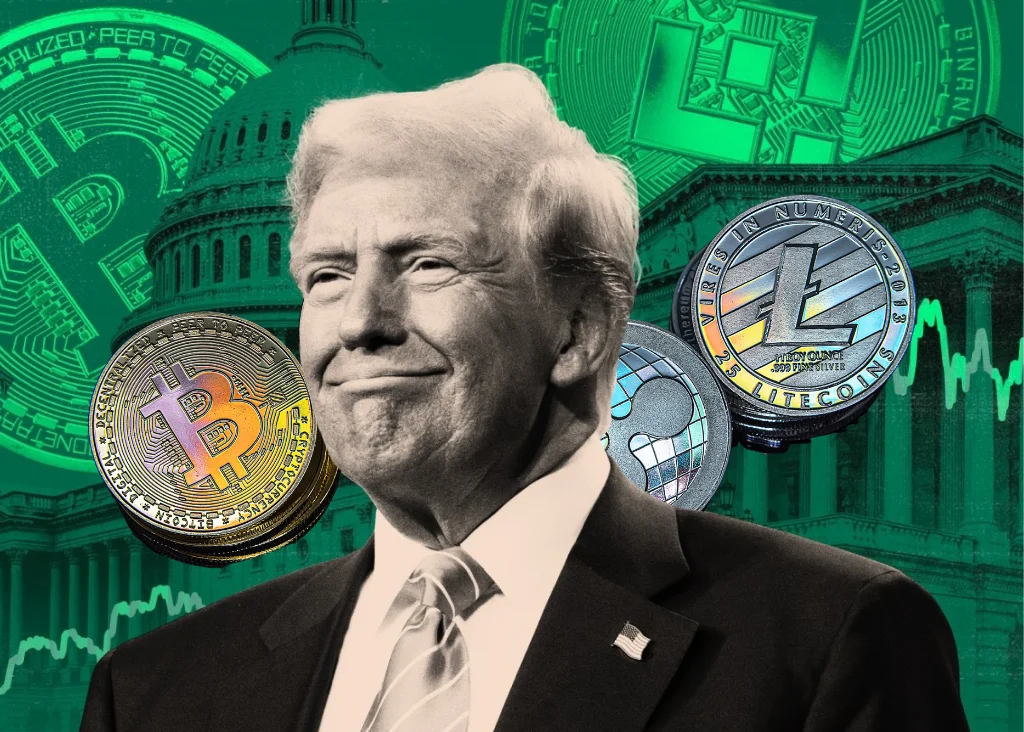


Why Crypto Regulations Are Tightening After 2026 Market Failures
Crypto has always lived in tension with authority. Born from distrust in banks and governments, it promised a parallel financial system open, borderless, and resistant to control. For years,...


Crypto has always lived in tension with authority. Born from distrust in banks and governments, it promised a parallel financial system open, borderless, and resistant to control. For years, regulators struggled to catch up. But 2026 marked a turning point.
Table Of Content
- The 2025–2026 Market Breakdown
- What Actually Failed?
- Korea’s $40B Giveaway Incident & Regulatory Response
- The Incident
- The Fallout
- Political Pressures on Crypto Policy (US & Global)
- United States: From Uncertainty to Enforcement
- Europe & Asia: Harmonization Over Chaos
- ETF Flows and Institutional Influence
- Why ETFs Changed Everything
- Institutional Capital Wants Order
- Why Governments Now See Crypto as Systemic Infrastructure
- Compliance, Adoption, and Stability
- More Rules, But Also More Trust
- Compliance Will Become a Competitive Advantage
- Where Crypto Goes From Here
After a series of systemic market failures, high-profile collapses, and politically embarrassing incidents, the conversation shifted. This wasn’t just about protecting retail investors anymore. It became about financial stability, national security, and the credibility of modern markets.
The result? Stricter crypto regulations emerging not as an option but as a necessity.
To understand why the regulatory climate hardened so fast after 2026, we need to look at what broke, who got burned, and how power—political and institutional—reasserted itself over the crypto economy.
The 2025–2026 Market Breakdown
The seeds of regulation were planted long before 2026. But the events of late 2025 and early 2026 forced governments to act.
By mid-2025, crypto markets were already under strain:
- Overleveraged DeFi protocols promising unrealistic yields
- Opaque stablecoin reserves
- Cross-chain bridges with weak security models
- Retail speculation fueled by social media and ETF hype
Then the cracks turned into fractures.
What Actually Failed?
Several categories of failure converged:
- Liquidity failures: Major DeFi protocols couldn’t meet withdrawals.
- Custodial failures: Centralized platforms froze assets without warning.
- Stablecoin instability: Algorithmic and partially backed stablecoins lost their pegs.
- Governance breakdowns: DAOs couldn’t respond quickly enough to crises.
These weren’t isolated events. They cascaded through the ecosystem like dominoes.
| Failure Type | Impact | Regulatory Concern |
|---|---|---|
| Stablecoin depegs | Loss of confidence in on-chain money | Monetary stability risk |
| DeFi insolvencies | Billions locked or lost | Systemic risk |
| Custodian freezes | Retail panic & lawsuits | Investor protection |
| Bridge exploits | Cross-chain contagion | Cybersecurity threats |
By early 2026, policymakers stopped asking “Should we regulate crypto?” and started asking “How fast can we?”
Korea’s $40B Giveaway Incident & Regulatory Response
One of the most shocking moments came from South Korea a country already deeply involved in crypto adoption.
The Incident
In Q1 2026, a government-linked digital asset platform mistakenly distributed approximately $40 billion worth of tokenized assets due to a smart contract logic error. The funds were sent to tens of thousands of wallets—some retail, some institutional, some unknown.
The problem?
- Transactions were technically “valid” on-chain
- The recipients didn’t request the assets
- There was no immediate legal mechanism to reverse them
Within hours, tokens were being sold, bridged, and mixed across chains.
The Fallout
The political damage was massive:
- Public outrage over government incompetence
- Emergency parliamentary sessions
- International headlines questioning crypto reliability
Korea responded with one of the strictest digital asset reform packages ever proposed in Asia:
- Mandatory smart contract audits for public platforms
- Licensing requirements for protocol developers
- Real-time transaction monitoring mandates
- Criminal liability for negligent code deployment
The message was clear: code was no longer above the law.
Political Pressures on Crypto Policy (US & Global)
Crypto regulation isn’t just about markets—it’s about power.
After 2026, political pressure intensified across major economies:
United States: From Uncertainty to Enforcement
In the US, years of regulatory ambiguity gave way to coordinated action:
- The SEC pushed for stricter asset classification
- The Treasury increased oversight on stablecoins
- Congress introduced digital asset consumer protection acts
Why?
- Voters lost money
- Institutions demanded clarity
- National security agencies flagged crypto misuse risks
Crypto became a political liability if ignored.
Europe & Asia: Harmonization Over Chaos
In the EU, MiCA-style frameworks expanded post-2026 to include:
- DAO reporting obligations
- DeFi liquidity disclosure rules
- Cross-border wallet identity standards
In Asia, Singapore, Korea, and Japan moved from innovation-first to stability-first approaches.
The global theme: financial systems cannot tolerate parallel chaos.
ETF Flows and Institutional Influence
One of the most underappreciated forces behind stricter crypto regulations is institutional money.
Why ETFs Changed Everything
By 2025–2026, spot Bitcoin and Ethereum ETFs brought:
- Pension funds
- Insurance companies
- Sovereign wealth funds
These players don’t operate in regulatory gray zones.
They demand:
- Custody guarantees
- Market surveillance
- Clear compliance rules
When trillions of dollars in traditional capital enter crypto, regulators must protect not just retail users—but the entire financial system.
Institutional Capital Wants Order
Paradoxically, institutions accelerated regulation:
- They lobbied for clearer laws
- They demanded risk controls
- They pushed for standardization
Crypto stopped being “anti-system” and became part of the system.
Why Governments Now See Crypto as Systemic Infrastructure
By 2026, crypto was no longer a fringe experiment. It was:
- Used in remittances
- Integrated into payment rails
- Held in national reserves
- Embedded in fintech and banking APIs
When infrastructure fails, regulation follows.
Governments don’t regulate because they hate innovation they regulate because collapse is politically unacceptable.
Compliance, Adoption, and Stability
So what comes next?
More Rules, But Also More Trust
Stricter crypto regulations after 2026 are not the end of crypto they’re the maturation phase.
We’re likely to see:
- Global licensing regimes for protocols
- On-chain audit standards
- Consumer insurance mechanisms
- Real-time risk dashboards for regulators
Compliance Will Become a Competitive Advantage
In the next cycle:
- Projects with legal clarity will outperform
- Anonymous, opaque systems will struggle
- Institutions will drive adoption
Trust not hype will define value.
Where Crypto Goes From Here
The events of 2026 didn’t kill crypto. They forced it to grow up.
Stricter crypto regulations emerged because the market proved one thing clearly: when systems reach systemic importance, they cannot remain lawless.
Crypto is no longer just a rebellion. It’s infrastructure.
And infrastructure always comes with rules.
The next era of digital assets won’t be defined by how much freedom they promise—but by how much stability they deliver.